WSC69 Alfa Romeo T33/2
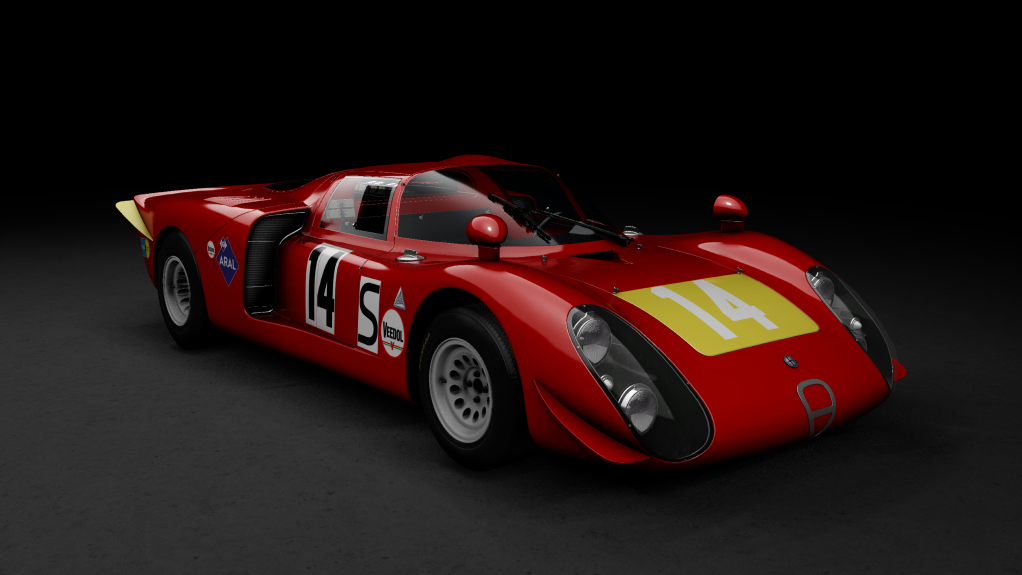
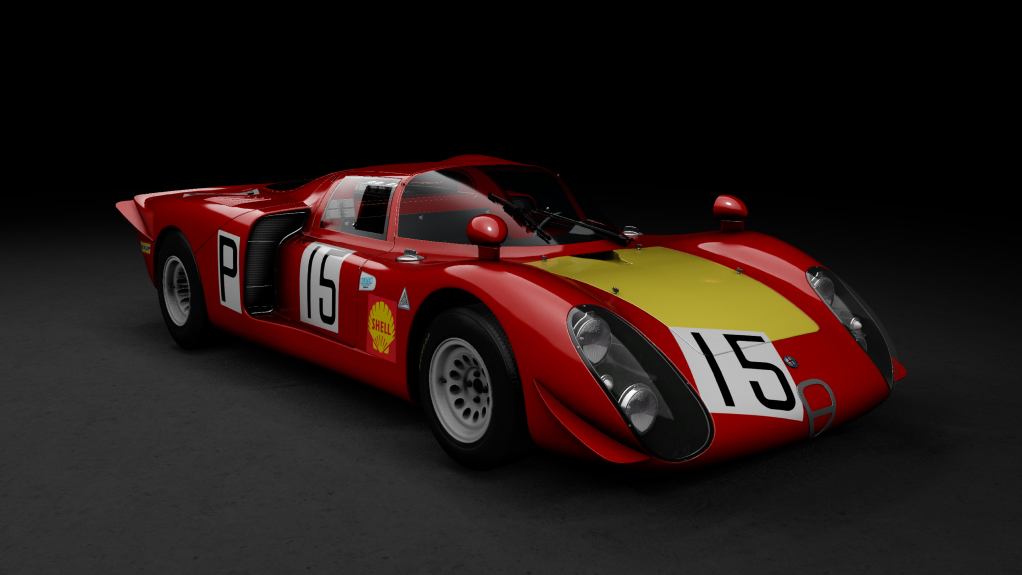
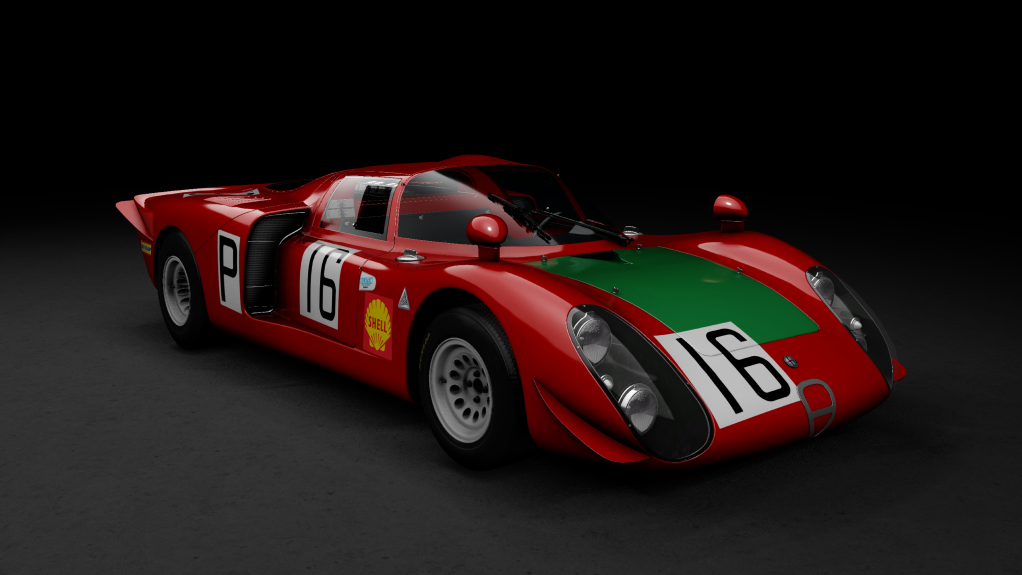
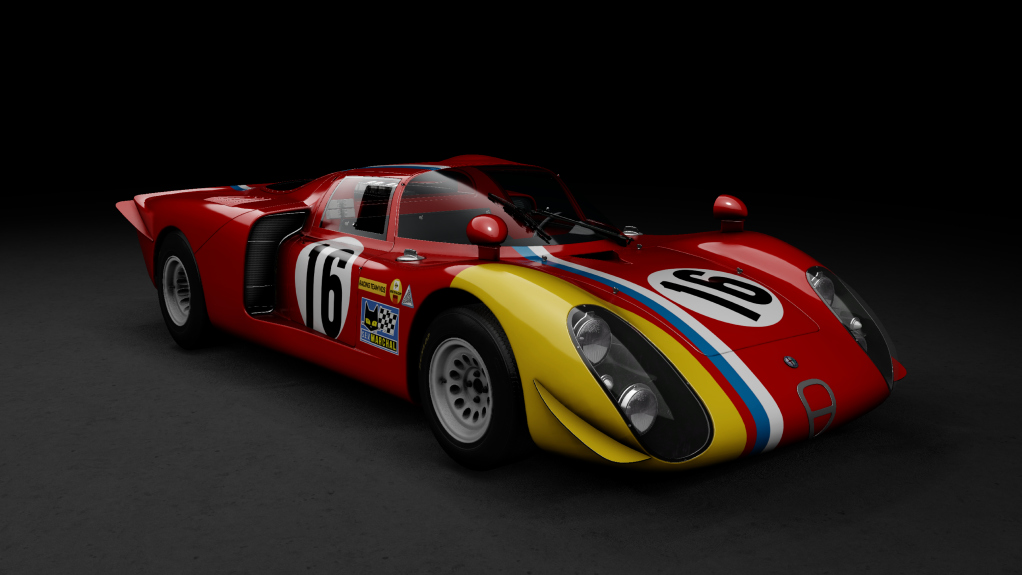
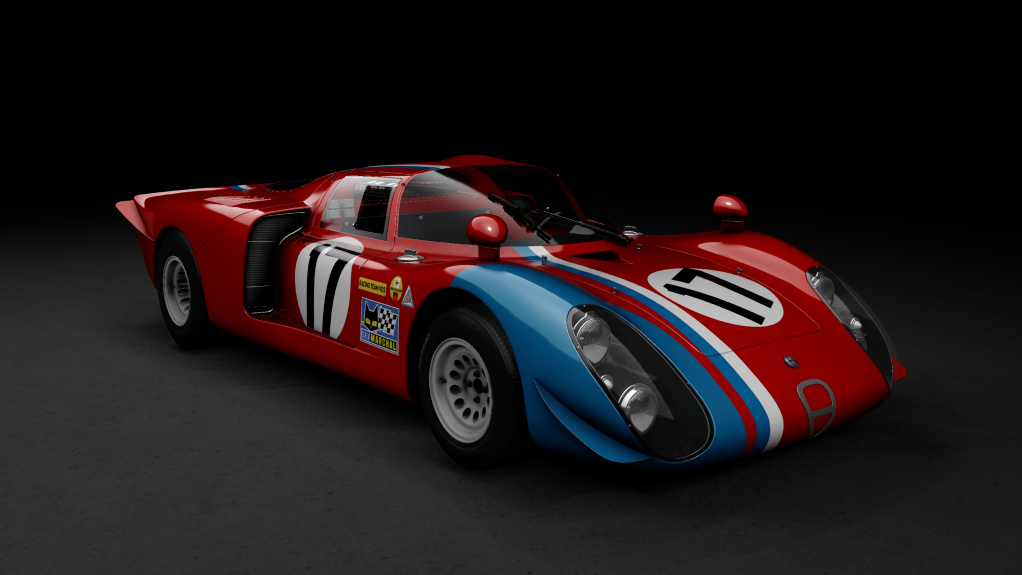
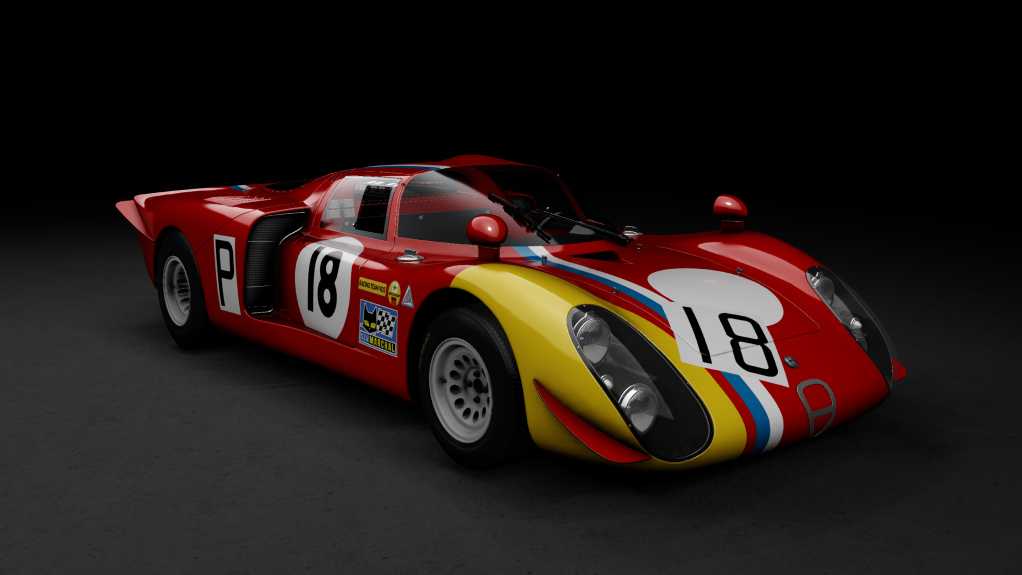
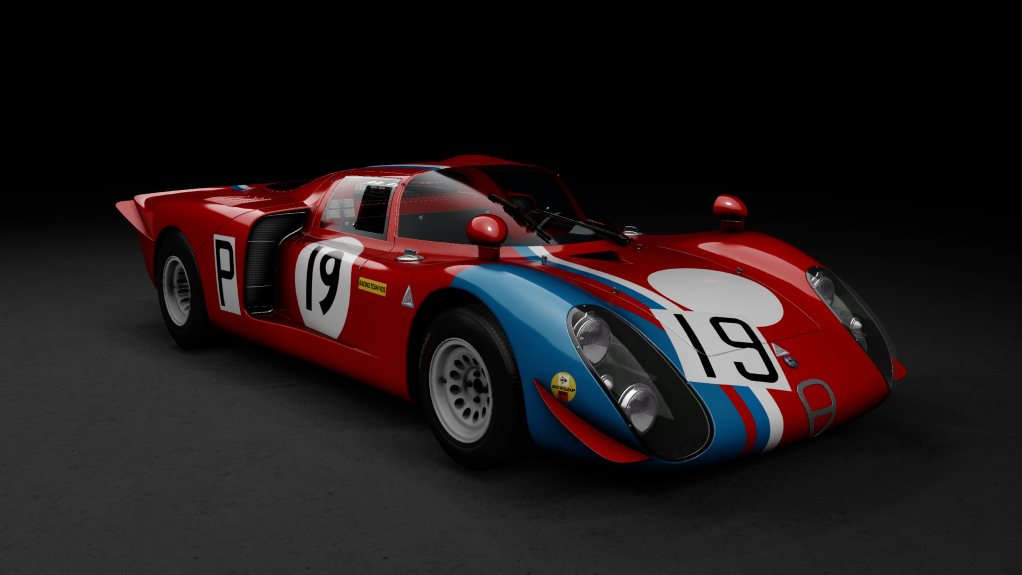
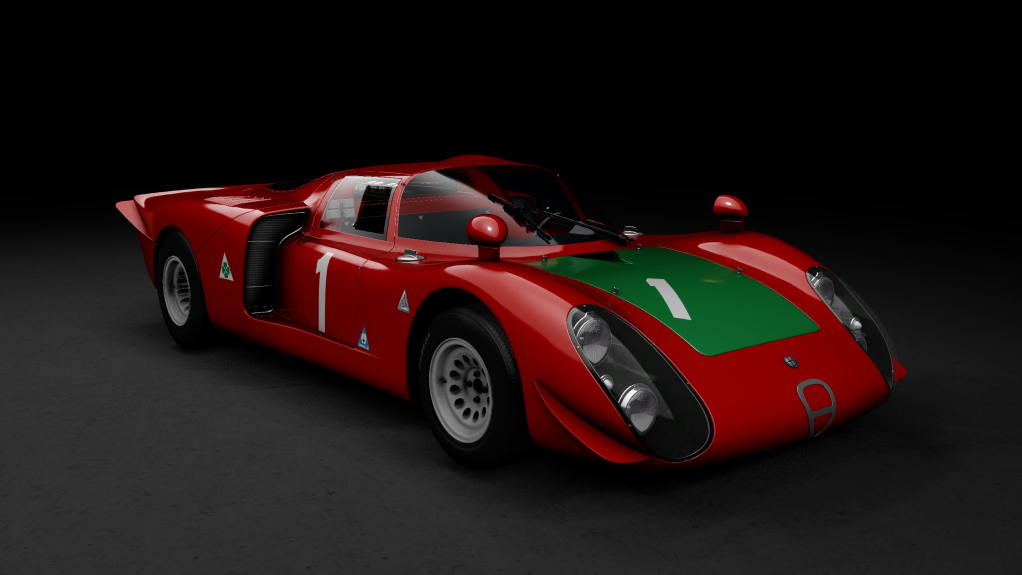
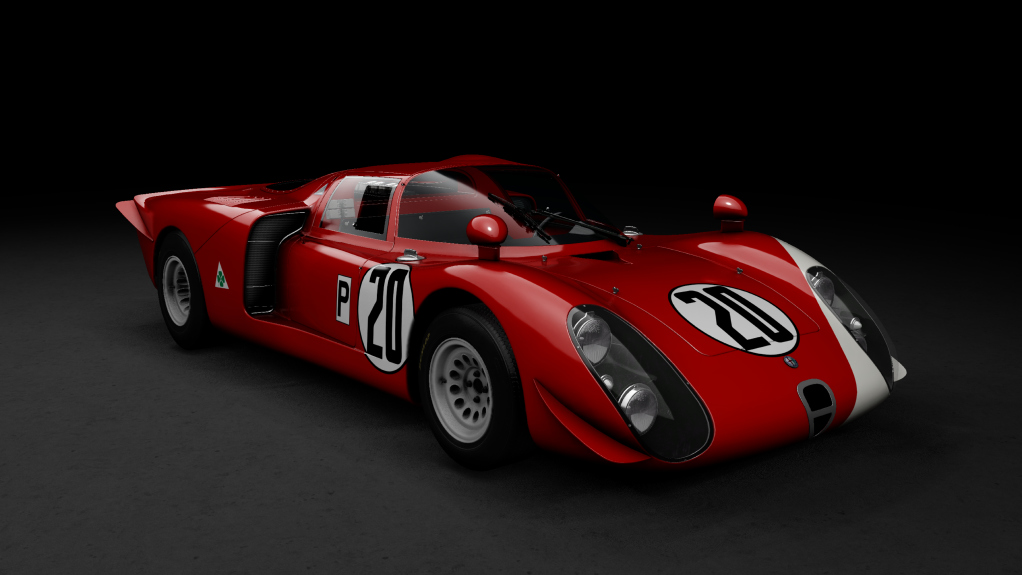
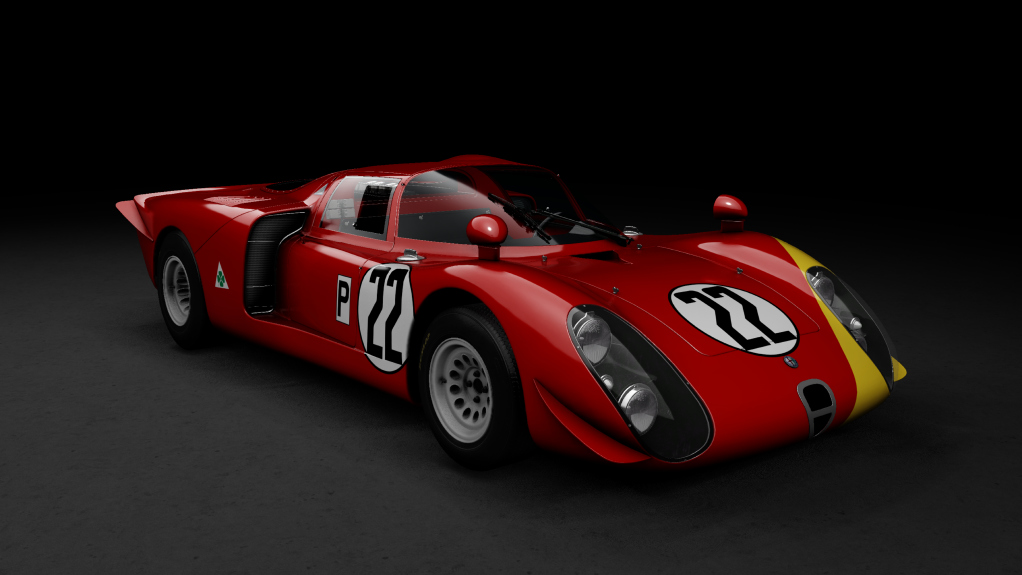
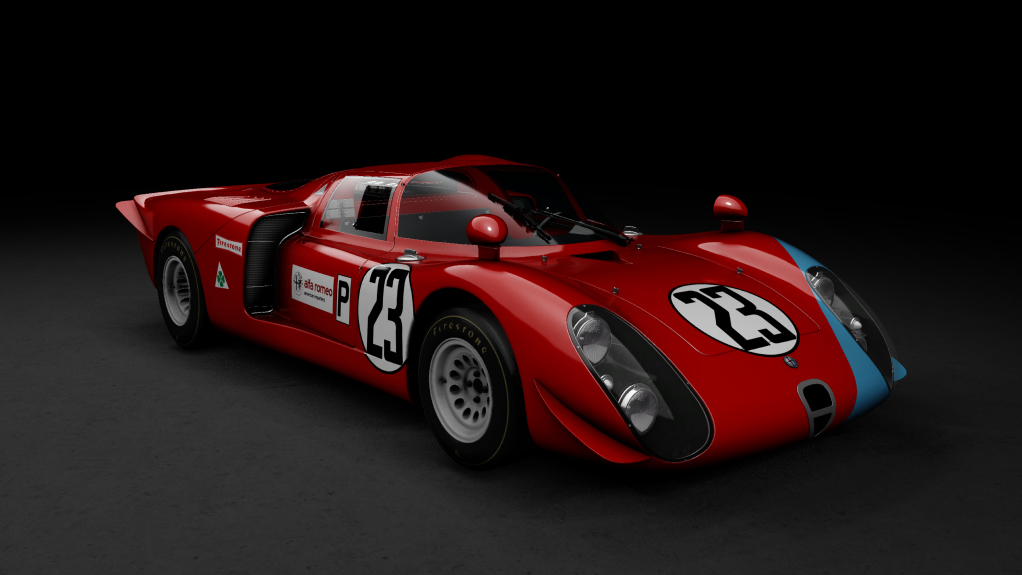
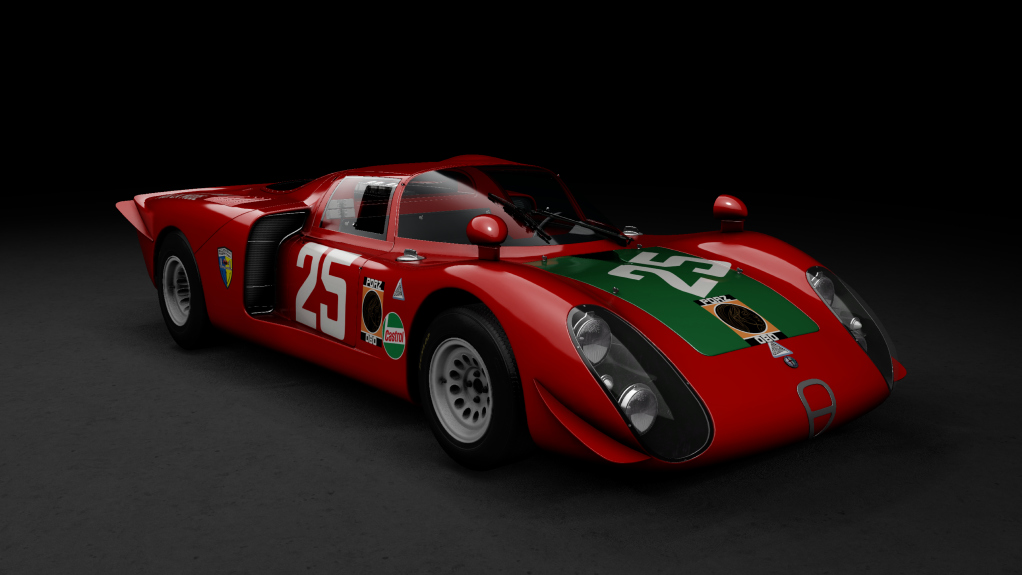
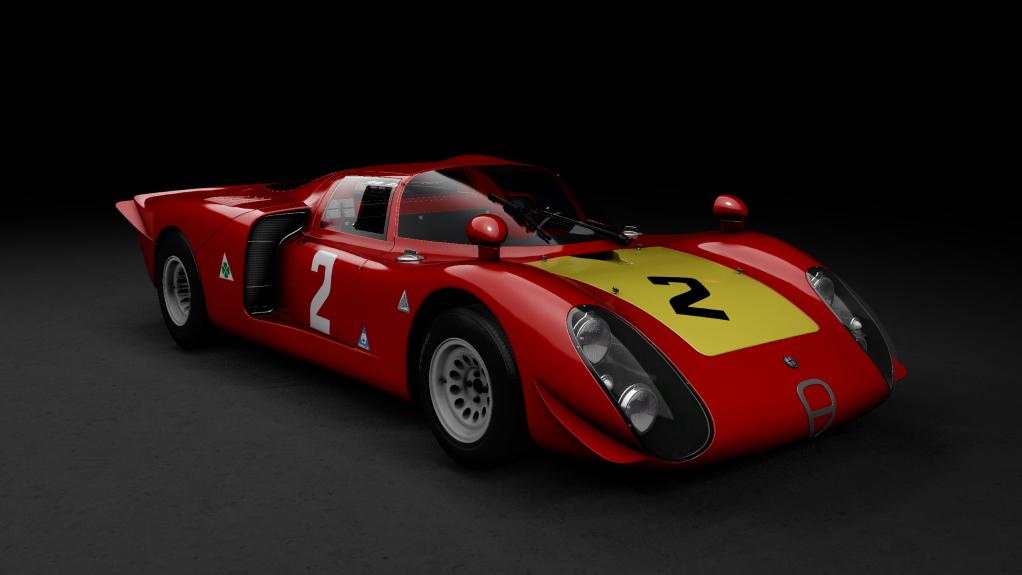
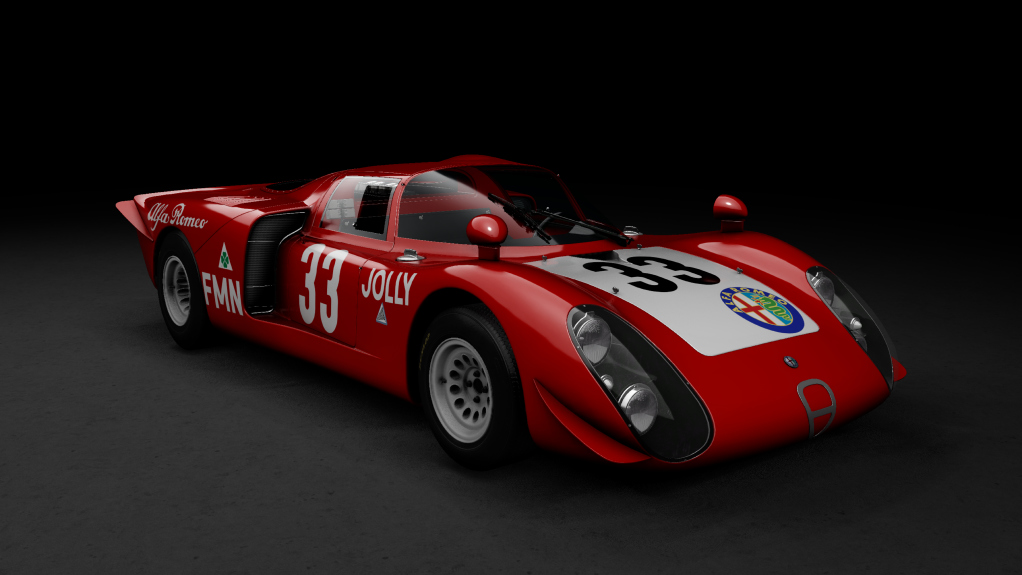
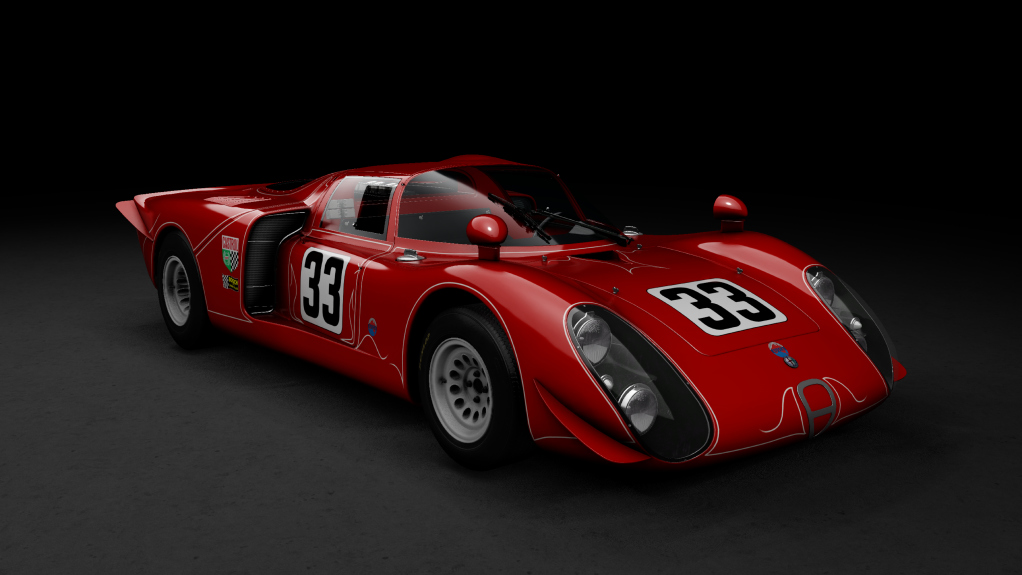
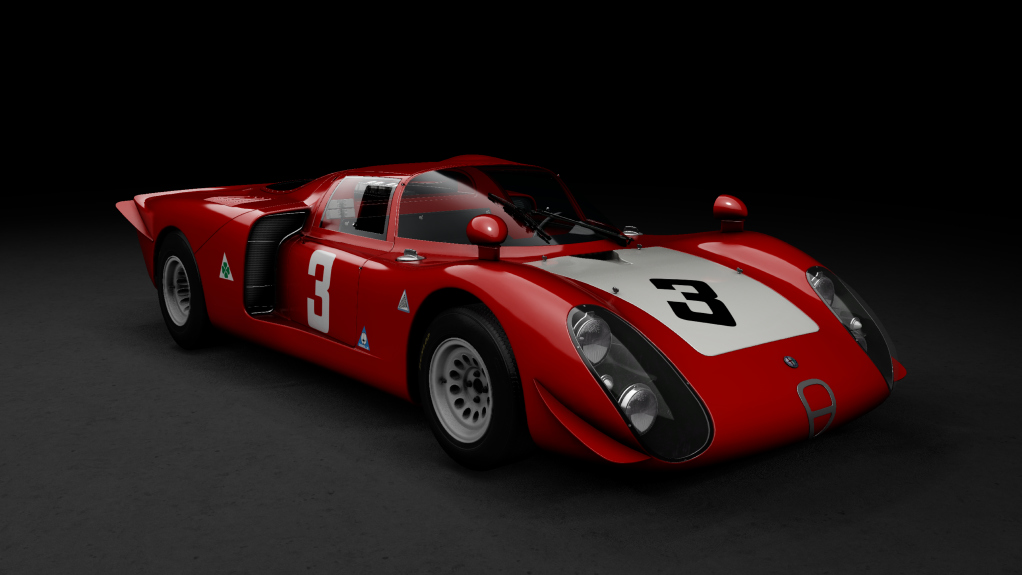
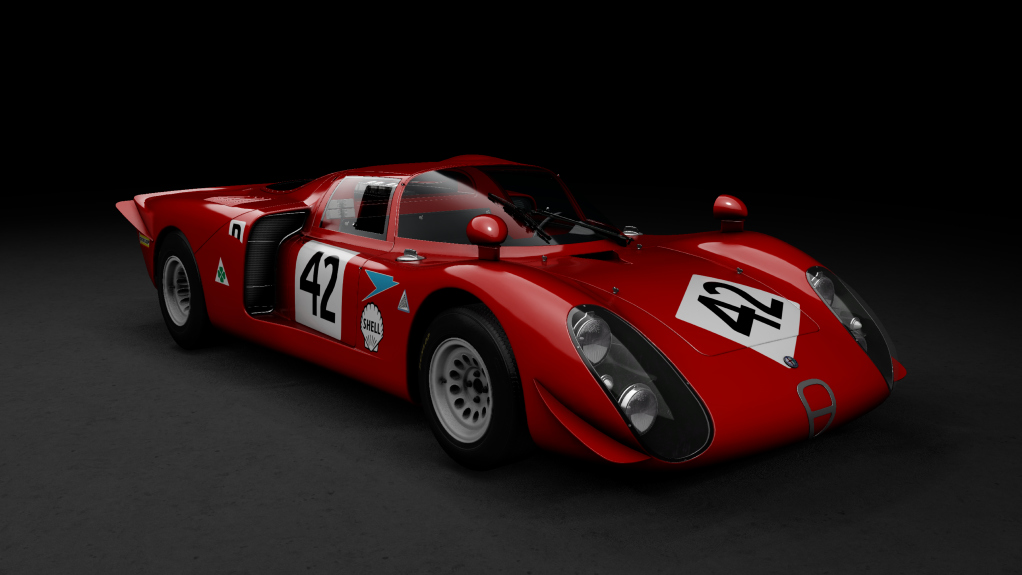
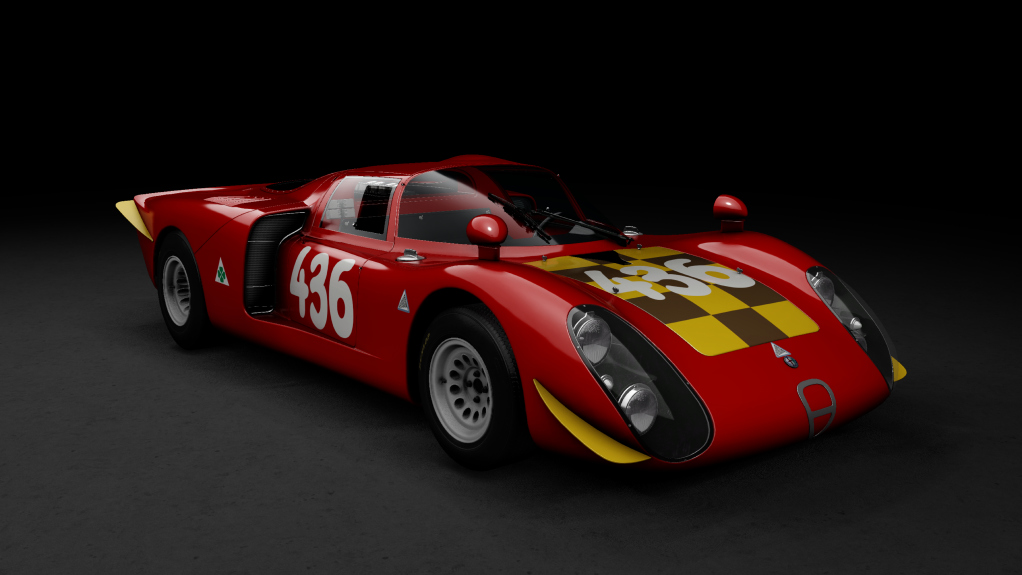
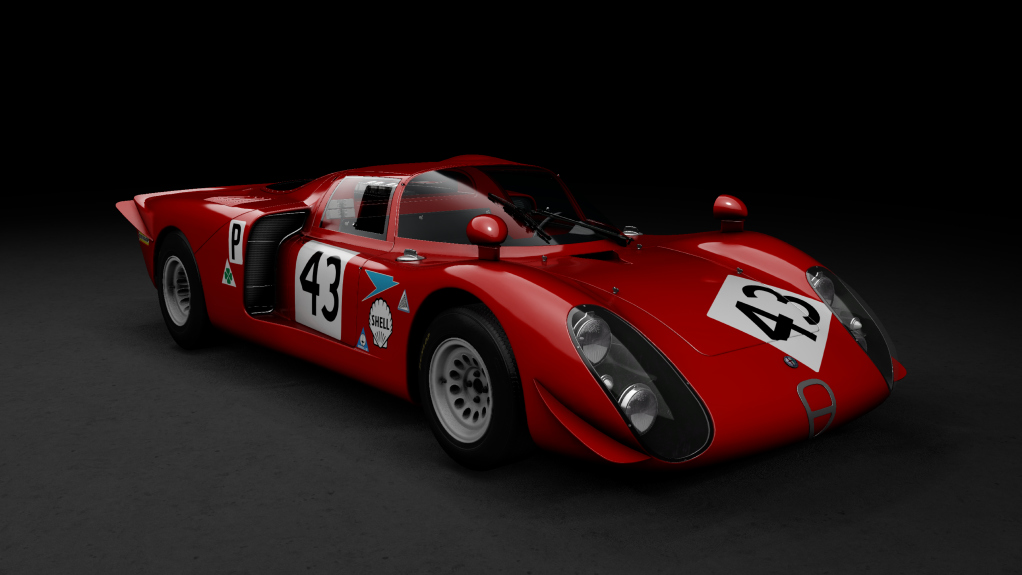
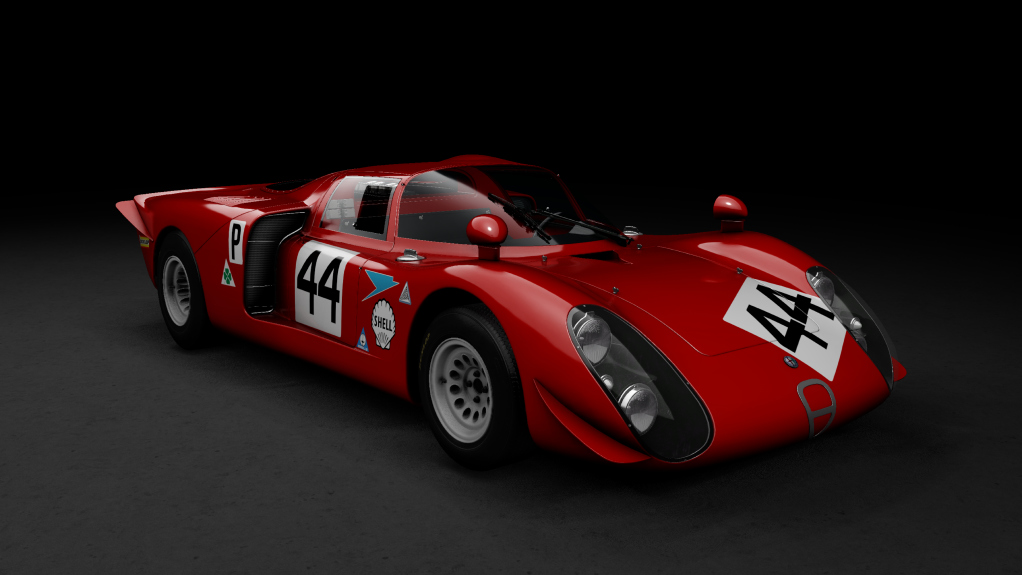
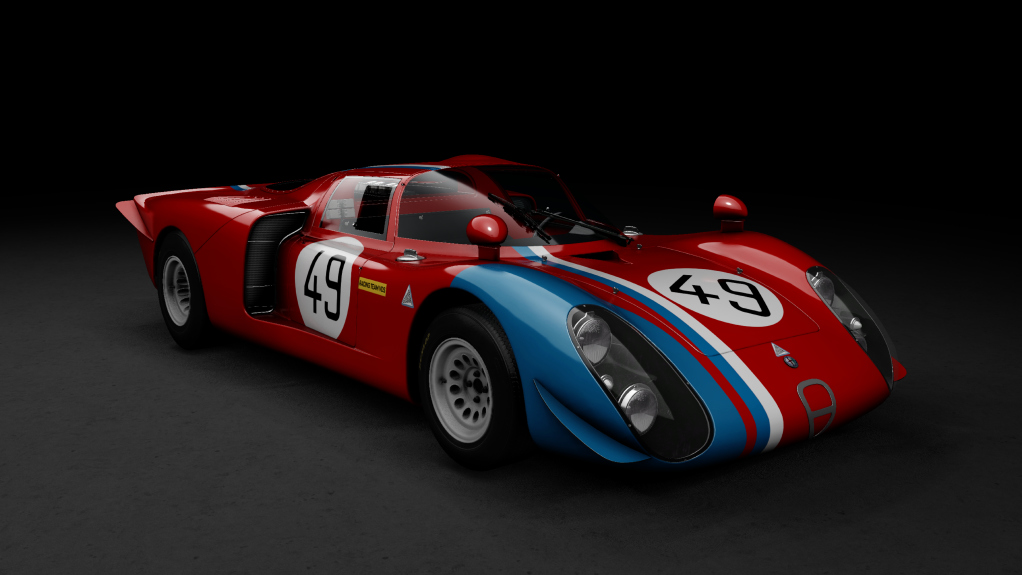
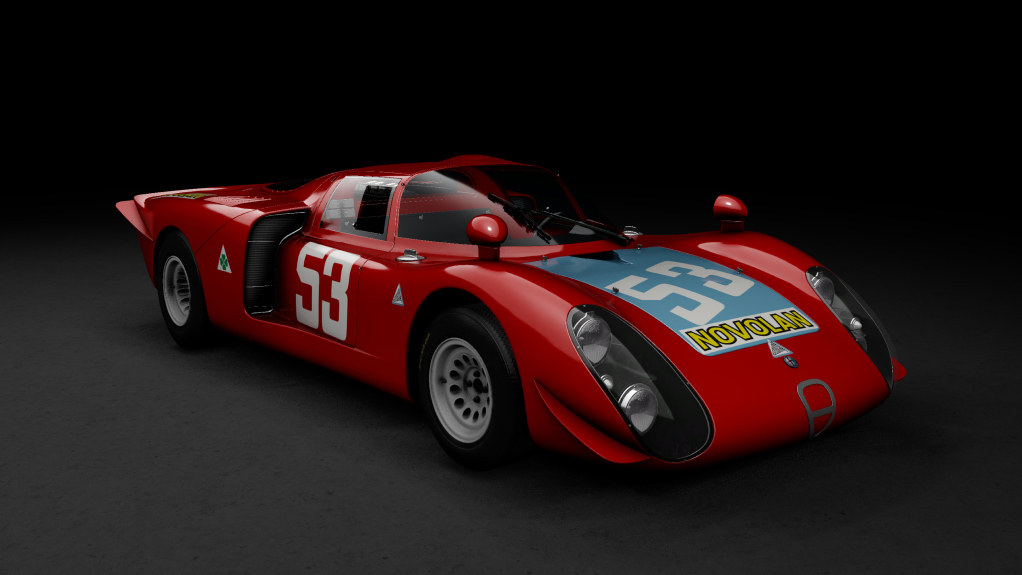
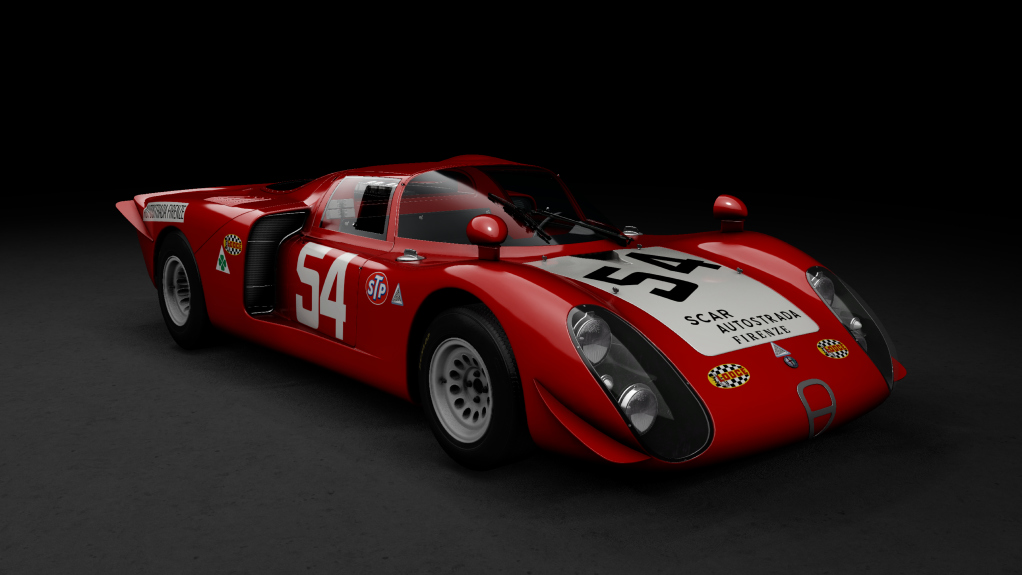
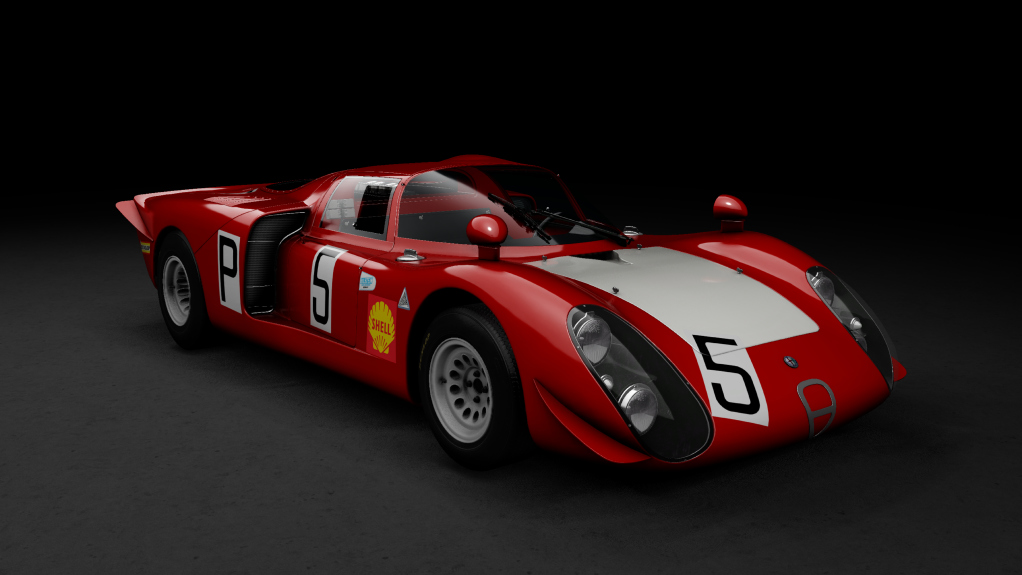
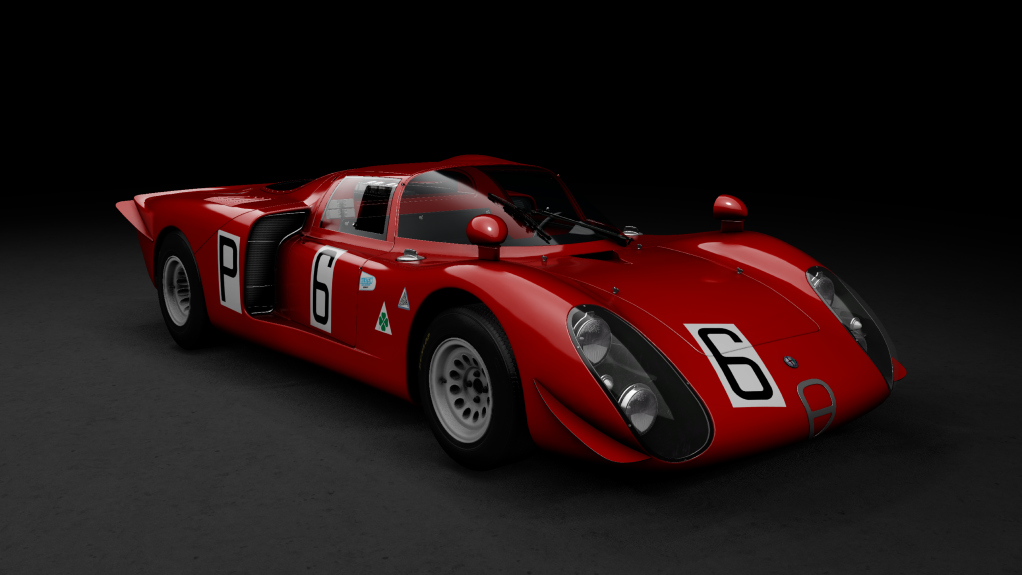
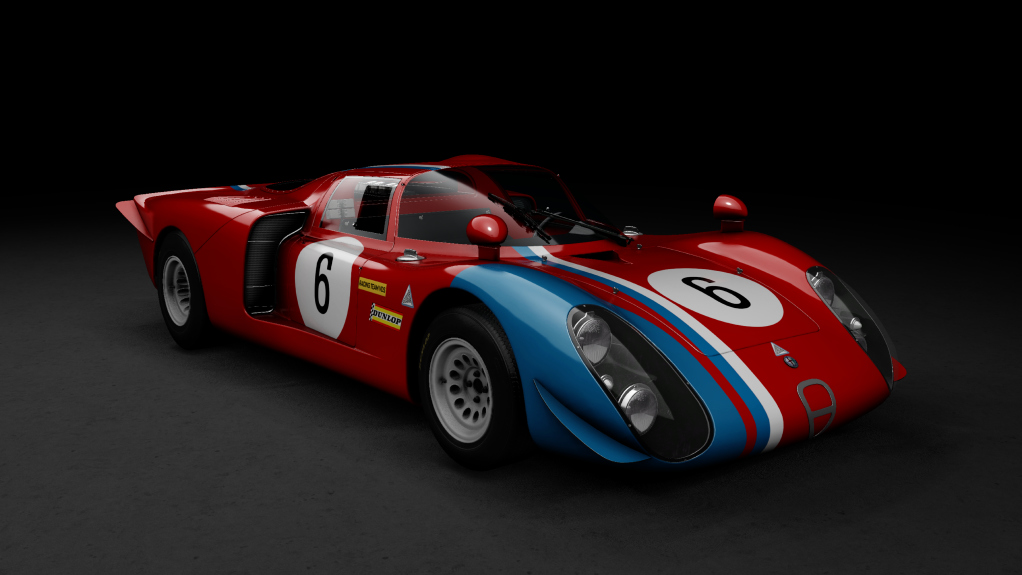
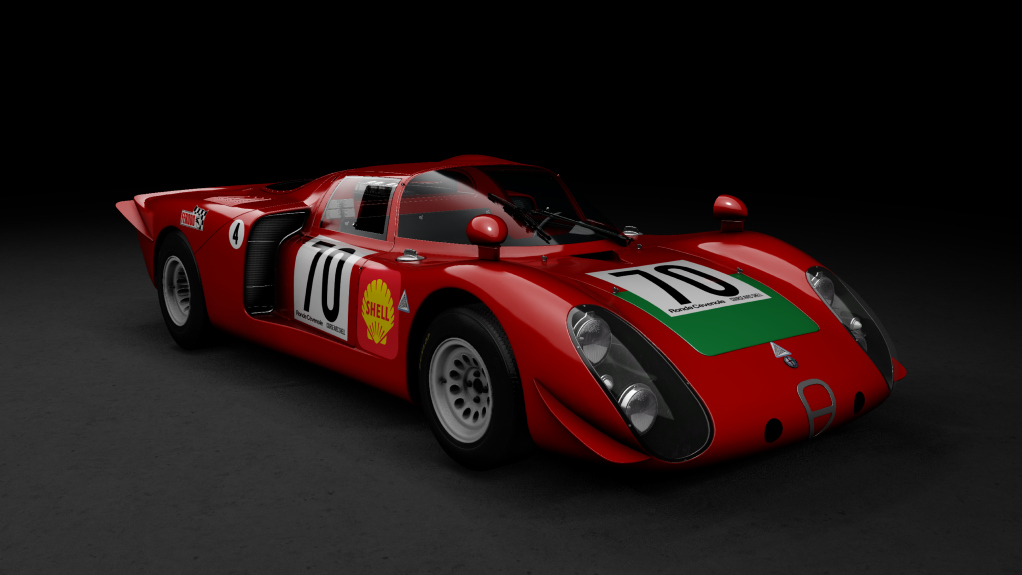
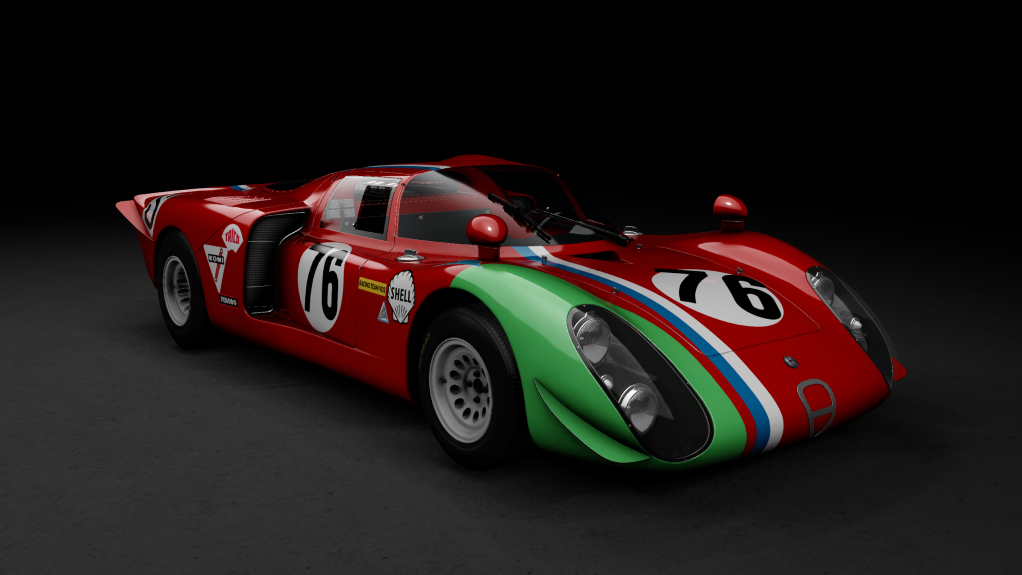
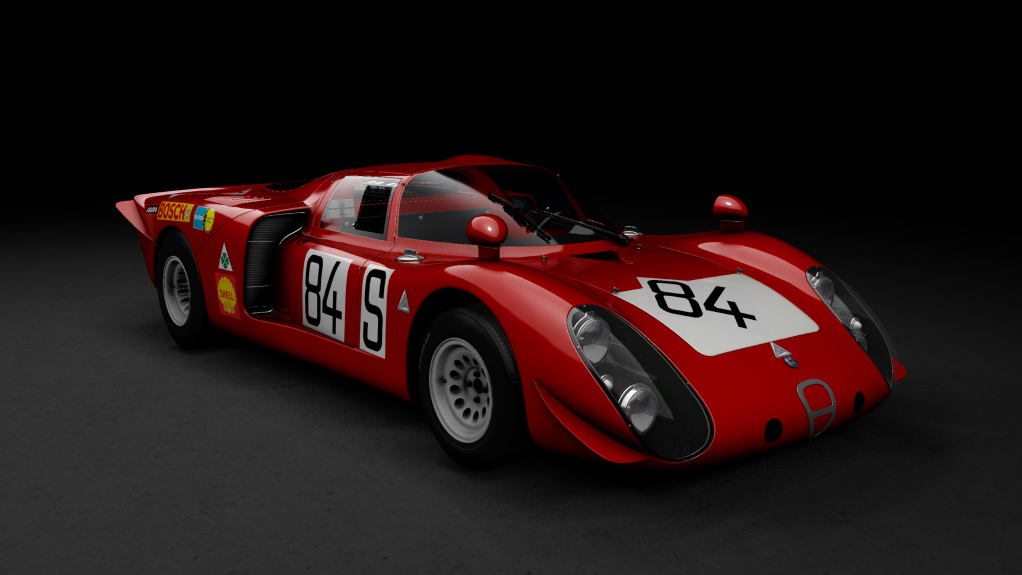
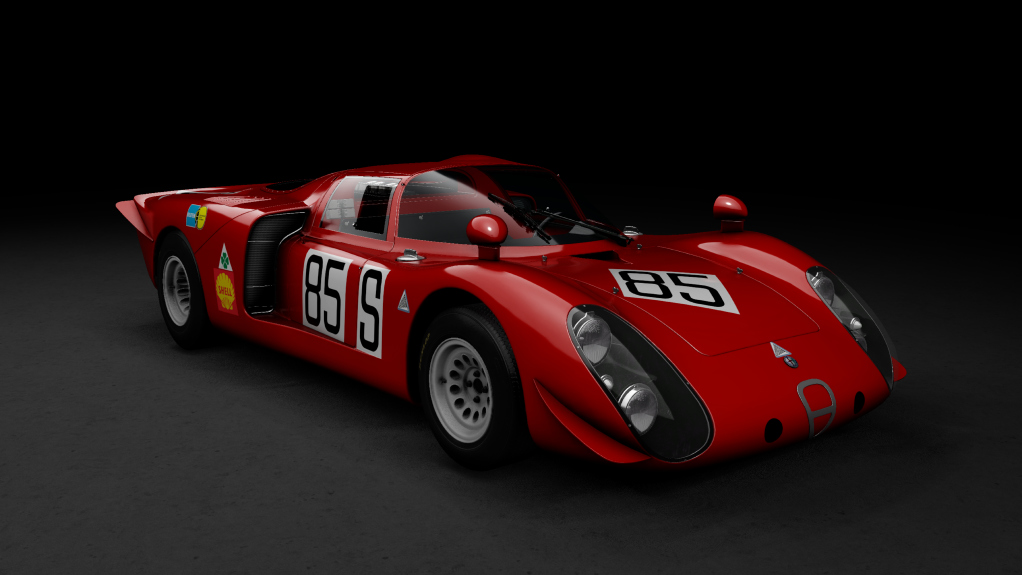
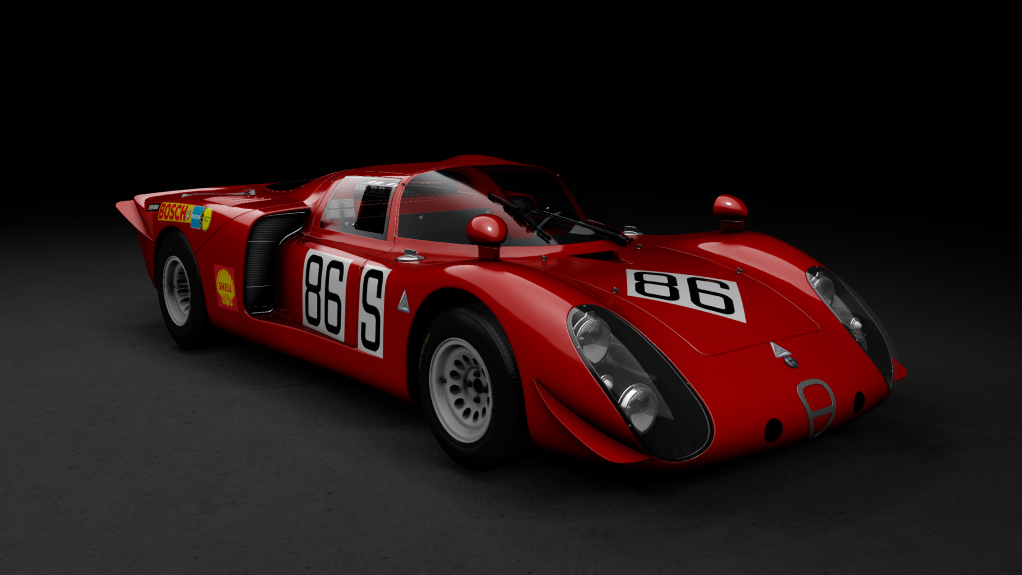
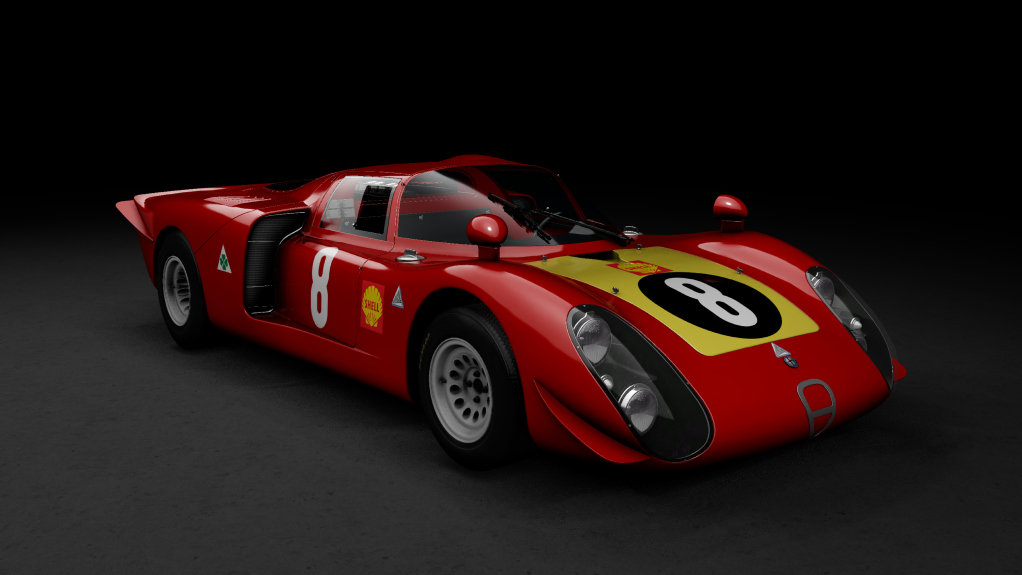
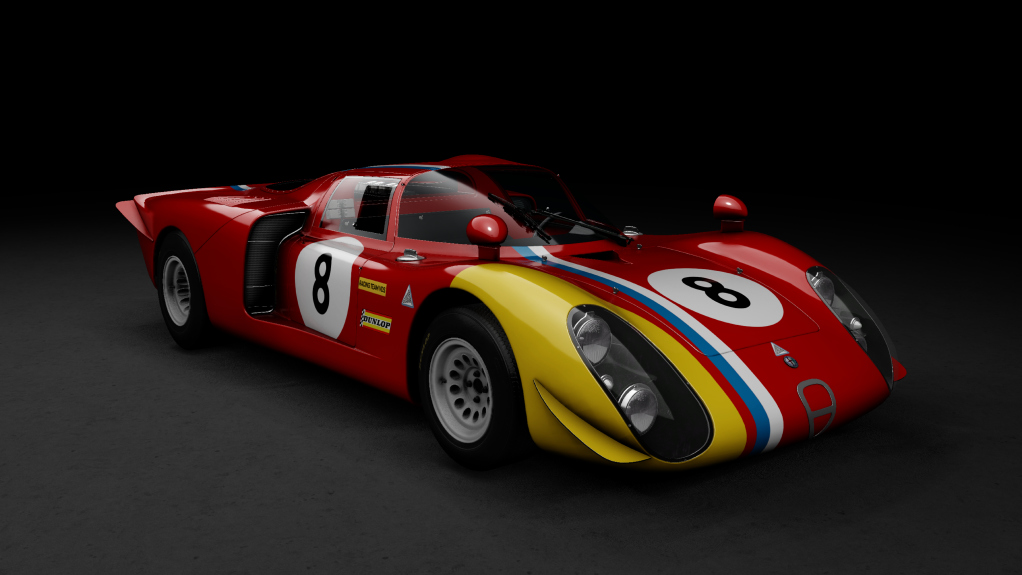
After the 1967 season went by without much success for the T33, Carlo Chiti went back to the drawing board. While retaining the original tubular "H" chassis from the first gen T33, a lot of work was put into redesigning the car, lowering it at the front and straightening out the rear in hopes of improving the general handling characteristics. The aluminium 2.0L V8 went from 1,995cc to 1,998cc and was now delivering 270hp, more than their direct competitor from Stuttgart. The T33/2 as it became known had it's debut at the 24 hours of Daytona in February of 1968, where it won the 2L Prototype class and finished 5th, 6th and 7th overall. This massive success earned the short tail the nickname "Daytona".
More success was to follow at Mugello, Imola, and Zandvoort, in part thanks to the Belgian privateer team VDS, who ran two T33/2's between 1968 and 1969. For Le Mans, a longtail was developed, which won the 2L class at the 1968 race. On home territory, Autodelta factory teams won the 2L class at the 1968 Targa Florio. An estimated 28 cars were built between late 1967 and 1968, which allowed the car to be entered in Group 4 races in 1969. By now the Autodelta team had moved on to developing the T33/3, leaving only privateer teams to duke it out in the increasingly competitive 2L class.
Australian Alfa Romeo racing team owner Alec Mildren developed a 2.5L variant of the aluminium V8 from the T33/2, which was quickly put to use in Formula racing and sports car racing, where it proved to Chiti that a 3.0L variant could also be possible, hence opening the gates for an even faster T33...
Setups
There are no setups for this car.
Sessions
This car has been used in 6 sessions.
Race
Saturday, February 15, 2025 10:43 PM (CET)Bridgehampton
Qualifying
Saturday, February 15, 2025 10:19 PM (CET)Bridgehampton
Practice
Saturday, February 15, 2025 10:12 PM (CET)Bridgehampton
Qualifying
Saturday, February 15, 2025 9:18 PM (CET)Bridgehampton
Practice
Saturday, February 15, 2025 9:05 PM (CET)Bridgehampton
Practice
Thursday, February 6, 2025 7:59 AM (CET)Bridgehampton
Tyres
- Vintage (LM60)
Specs
- BHP: 270 bhp
- Power Ratio: 2.22 kg/hp
- Top Speed: 280+ kph
- Torque: 203 Nm
- Weight: 600 kg
About
- Author: Team WSC Legends
- Brand: Alfa Romeo
- Class: Prototype 2000
- Country: Italy
- Year: 1968